Gratitude

“Fill the earth with your songs of gratitude.” – Charles Spurgeon.

In times like this when we are faced with difficulties or challenges, we are often quick to forget our numerous blessings and focus rather on all that is going wrong. It also seems like common practice to always be in a competition to see who has it worse. I don’t know about you, but I want to try focus on the good in each situation.

This topic is very closely related to my post on enjoying the little things. Gratitude and the enjoyment of life go hand in hand, it’s really hard to have one without the other.

I feel this is more evident now than ever before, that we can look back at all the things we took for granted pre-lockdown and realise how privileged we were to walk around without restriction or fear. To be able to gather with friends without a thought or go to the shops without having to wear a mask and worrying about our health. So often it is moments like this that bring to our awareness how much we take for granted and how little gratitude we may show at times. I hope even when this time has passed, we will learn to appreciate the little things and find gratitude.

“It’s a funny thing about life, once you begin to take note of the things you are grateful for, you begin to lose sight of the things you lack.” – Germany Kent

I don’t think we need to wait until all of this has passed in order to start being grateful again, there is still so much to be thankful for. Just take a walk in the morning, breathe in the fresh air and appreciate all the beautiful sights and sounds all around you.

“What separates privilege from entitlement is gratitude.” – Brene Brown

It has been suggested in a variety of psychological studies that gratefulness has the ability to boost our levels of happiness and fosters greater physical and psychological health. By learning to exercise gratitude, even in small things, we can actually improve our health and happiness.

We live in a consumer culture in which happiness and success are based on material wealth and what you own. We have been taught to constantly want… Our possessions have become our source of happiness… And this can never last as there is always something bigger and better. This has made an attitude of gratitude hard to cultivate, and we need to change this.

“We tend to forget that happiness doesn’t come as a result of getting something we don’t have, but rather of recognising and appreciating what we do have.” Frederick Keonig.

We can start fostering a sense of gratitude by noticing the goodness in life (May need a perspective change). Take some time to thank someone and let them know what they mean to you. Pause and reflect on the numerous blessings in your life, however small.

“Gratitude unlocks the fullness of life. It turns what we have into enough, and more. It turns denial into acceptance, chaos to order, confusion to clarity. It can turn a meal into a feast, a house into a home, a stranger into a friend.” – Melody Beattie.

So often we only want to be grateful for the very obvious blessings. We need to begin to see hardships and difficulties as a reason to be grateful as well. Often through these times we learn, grow and become more resilient than before. Had we not had these difficulties and challenges in life we would not have had the opportunity to stretch ourselves and become more like the version of ourselves that we would want to be. This too we need to be grateful for. Having gratitude can change obstacles and difficulties into opportunities for positivity.

“Cultivate the habit of being grateful for every good thing that comes to you, and to give thanks continuously. And because all things have contributed to your advancement, you should include all things in your gratitude.” – Ralph Waldo Emerson.

It is not happiness that helps cultivate a sense of gratitude, it is gratitude that cultivates a sense happiness within us.

Hebrews 12:28 – “Therefore, since we are receiving a kingdom that cannot be shaken, let us be thankful, and so worship God acceptably with reverence and awe”.
Enjoy the little things

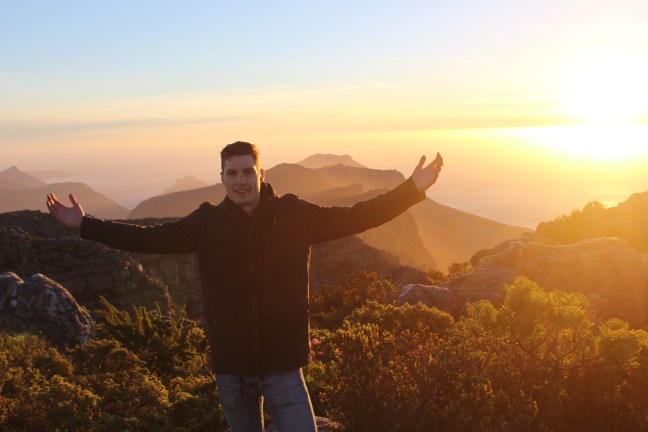
So often we go through life looking out for or waiting for those mountain top experiences. The truth is that most of our lives are navigated along the plains. There is nothing wrong with searching for the mountain top experiences of life, we all love them, and those moments are often the ones we treasure the most and hold onto for years. The problem is that they do all end at some stage.

That is why I wanted to speak more about the plains. It’s easy to be present and soak up all the wonder and enjoyment when we are on top of the mountain. How easy is it to miss the same beauty and majesty that surrounds us when we are walking the plains of everyday life?

It’s a challenge to me just as much as it is a challenge to you, to be more mindful in being present in every moment. Sometimes we need to slow down and see the beauty that is no doubt there. It’s hard to miss the big moments in life, they are usually very obvious, a new car, new job, marriage, kids. It’s really easy to miss the small moments. But what if the small moments are just as significant? What if these moments are the ones that really make up our lives? 

I’m sure there are many things you are currently missing that were taken for granted pre-lockdown. It’s such a great time to realise how much of the lives we normally enjoy are made up of the small things we usually don’t even give a second thought. The freedoms of going for walks on the beach, of not having to wear a facemask, and being able to visit family and friends.

I love that in the film Zombieland there are rules for survival and rule #32 is “enjoy the little things”. Even in a world infested by zombies the survivors deem it necessary to put this into their list of rules for survival. And I’d say it is necessary for survival, real survival. It can be the difference between us becoming a Zombie, plodding along aimlessly, and being alive and well.

The whole movie Tallahasse (played by Woody Harrelson) is in search of a Twinkie. It’s really comical because he’s this big tough guy who you would not want to get into a confrontation with, yet he understands the meaning of a simple Twinkie (one of life’s little joys, of which there are so many).

The small things are often the things we look back at and remember. Those movie nights with friends, learning something new, having a good laugh with a sibling or just a random smile from a stranger. These are moments we often forget to enjoy because we are caught up in the busyness of our lives.

“Sometimes the little opportunities that fly at us each day can have the biggest impact.” ― Danny Wallace (Yes Man)

Yes, I want the significant moments in life, those big moments everyone looks forward to. But I don’t want to be so fixated on the mountains that I forget to enjoy the beauty around me with each step. I know it’s cheesy and lame, but so often the truth is cheesy and lame. I want to learn to really enjoy each one of life’s little moments.

“Enjoy the little things in life because one day you’ll look back and realize they were the big things.” – Robert Brault

Psalm 16:11 – “You make known to me the path of life; in your presence there is fullness of joy; at your right hand are pleasures forevermore.”

Facing fear

I really enjoy inspirational and uplifting films, especially when they are based on truth. Recently I watched the film Coach Carter, which is a true story based on a man named Kenny Carter who became the basketball coach at Richmond High School. This film has many great themes and messages throughout, but the one I will focus on is his pursuit for what he believed in despite the extreme opposition that he faced. There is no doubt that there would have been the presence of many fears; failure, rejection, loneliness and being ostracized. Despite these real fears Coach Carter pushes on and fights for what he believes in. He shows courage, determination, resilience and grit because he knows exactly what he is fighting for and what he wants to achieve.

Throughout the film Coach Carter asks one of his players what it is that he fears, to which the player responds near the end of the film:

“Our deepest fear is not that we are inadequate. Our deepest fear is that we are powerful beyond measure. It is our light, not our darkness, that most frightens us. Your playing small does not serve the world. There is nothing enlightened about shrinking so that other people won’t feel insecure around you. We are all meant to shine as children do. It’s not just in some of us; it is in everyone. And as we let our own lights shine, we unconsciously give other people permission to do the same. As we are liberated from our own fear, our presence automatically liberates others.”

Read this again. This quote really resonated with me. So often we feel we have to hold onto our fears and keep them to ourselves. Maybe through the act of sharing our fears and letting them go we allow a space for others to do the same. Our actions set a precedent for others, so what precedent do we want to create?

Is fear inherently negative? Do we need to avoid fear at all costs? Am I inadequate for feeling fear? I don’t believe fear itself is a bad thing, it helps us exercise a healthy sense of judgement and caution. The fear that stops us from moving forward and from choosing life, is fear that we need to overcome.

“One of the greatest discoveries a man makes, one of his great surprises, is to find he can do what he was afraid he couldn’t do.” —Henry Ford

There are many different types of fear, I can’t address them all so the one I will focus on is irrational fear that debilitates us and holds us back from experiencing life.

In the song Love alone is worth the fight there is a line that has stuck with me, “Is it fear you’re afraid of?” I no longer want to be held captive by fear. Fear only serves to incapacitate us, hold us back and create stagnation.

“Of all the liars in the world, sometimes the worst are our own fears.” – Rudyard Kipling

There have been many times that I have passed up opportunities and stopped myself from getting involved in things I really wanted to do due to fear. I have had to work through many of my own fears such as the fear of failure, fear of inadequacy and of not being good enough. Facing our fears doesn’t mean that we won’t at times still fail, or struggle. But there are lessons in failure and the facing of our fears are a necessary part of our journey.

I no longer want to live with the lies of fear. I want us all to live boldly, to be gracious to ourselves and others and to create an environment that allows ourselves and others to face our fears without the fear of failure or rejection or simply “not being good enough”.

In a previous blog titled Perspective, I said that “We cannot be brave without the presence of fear”. I don’t believe we should be on a pursuit to eradicate fear from our lives, we should be learning to rise above it.

“I learned that courage was not the absence of fear, but the triumph over it. The brave man is not he who does not feel afraid, but he who conquers that fear.” —Nelson Mandela.

It’s important for us to acknowledge the fears we have; only then can we accept them and begin to move past those fears. Perspective is something that plays a big role in the overcoming of our fears and so we need a positive change in our mindset. Learn to hold a hand, we are not in this alone and we were not designed to face our fears alone. Don’t wait for fear to subside before doing whatever it is that fear has been holding you back from, learn to go with fear.

“You know, sometimes all you need is 20 seconds of insane courage, just literally 20 seconds of embarrassing bravery, and I promise you something great will come of it.” (We bought a zoo).  

In the story of David and Goliath, David faced a monumental task. I have no doubt that if I were in David’s shoes, I would have been terrified. How could I, a shepherd boy with just a sling and five stones face this monster of a man that leaves armies shaking in their boots? The beauty of this story is that David did not choose to focus on the size of Goliath, or on how dangerous he was, but rather David focused on the source from where he drew his strength. David didn’t focus on Goliath, but rather spoke about how great God is. In situations where we are facing our own Goliaths, we need to learn to talk faith rather than fear.

I encourage you to start small. Gain confidence through small victories, and as you grow in this confidence and self-belief rise above the fear and conquer your goliath. RISE ABOVE IT.

“To be fully self-conscious means that you’re perfectly aware of your limitations and how you might be hurt. And then to make the decision to move forward into the unknown and the land of the stranger anyway… That’s one of the secrets to a good life.” – Jordan Peterson.

Philippians 4:6-7 – “Do not be anxious about anything, but in every situation, by prayer and petition, with thanksgiving, present your requests to God. And the peace of God, which transcends all understanding, will guard your hearts and your minds in Christ Jesus.”

Power of positivity

“The greatest discovery of all time is that a person can change his future by merely changing his attitude.” – Oprah Winfrey.

I have previously written a blog on perspective which ties in very closely to this topic. In the blog on perspective I highlighted that we are surrounded by a lot of negative media and a lot of negative talk. So, it is so important that we do not let this shape the way we perceive our reality and our world.

“Everything can be taken from a man but one thing: the last of the human freedoms – to choose one’s attitude in any given circumstance, to choose one’s own way.” (Viktor Frankl) We have been given the gift of being able to choose our own attitude. How often are we presented with situations and circumstances that we cannot change and how many aspects of our lives are outside our control. Let’s take hold of the ability to control our attitude and not let things outside our control determine it for us.

“When we are no longer able to change a situation, we are challenged to change ourselves.” (Viktor Frankl) I think in one way or another we are all currently in a situation that to some degree we cannot change. So how is it that we can change ourselves. What attitude can we adopt? What perspective can we choose? What is the focus of our energies? How can we choose positivity?

There is a myriad of resources out there that talk about attitude and positivity; here are two of the Ted talks I watched which helped shape some of my thoughts on this blog: Getting stuck in the negatives (and how to get unstuck) by Alison Ledgerwood and The happy secret to better work by Shawn Achor.

In the Ted talk by Shawn he says that if we study what is merely average, we will remain average. If we think merely average, we will remain merely average. I think it’s important to take some time to think about our thoughts and what it is that we actually think and believe, and what it is that we actually want to think and believe?

“Positive psychology is the scientific study of what makes life most worth living” (Peterson, 2008). Positive psychology is a scientific approach to understanding human thoughts, feelings and behaviour with the focus being on strengths rather than weaknesses. So much of psychology focuses on what is wrong with individuals and how to assist them in reaching “normal” while positive psychology focuses on improving on the already “normal”. Strength is as important as weakness.

Do our minds get stuck in the negatives? Our minds can see the same things in different ways, is the glass half full or half empty? Where do we focus our attention, on what is there, or what is missing?

“When one door of happiness closes, another opens; but often we look so long at the closed door that we do not see the one, which has been opened for us.” – Helen Keller

Mindfulness is an important aspect of positive psychology. Mindfulness is the moment to moment attention to our thoughts, emotions, sensations and surroundings. We need to find ways to become more grounded in the moment and realise that happiness can be cultivated.

Happiness is a choice and our reality is shaped by the lenses we use to view the world through. Happiness is not measured by our external world but by the way in which our brain processes our external world. It is important that we begin to add an attitude of gratitude as well as privilege to our world lenses.

Gratitude is a big contributor to happiness in life, and research suggests that the more we cultivate gratitude, the happier we will be.

Colossians 4:2 – “Devote yourselves to prayer, keeping alert in it with an attitude of thanksgiving”.

1 Thessalonians 5:18 – “in everything give thanks; for this is God’s will for you in Christ Jesus.”

Often our view is that if we work harder, we will be more successful and therefore happier. What if the truth of happiness and success is actually the reverse of this? We perform better when happy and positive.

Neurologically our brain secretes a neurotransmitter called dopamine that plays a role in how we feel pleasure. When our thoughts are positive dopamine is released in the brain, which can both make us happier as well as activate our learning centres in our brain making it easier to adapt to the world around us and the current situations we face.

As I have spoken about previously, we have the ability to rewire our brains. Some of the ways in which we can consciously rewire our brains is by being constantly mindful of what we are grateful for. Journaling at the end of the day and writing down all the positive aspects of our day and what we enjoyed can help us revisit those feelings and shape a healthier thinking brain.

Positive talk, exercise and meditation are crucial in healthy brain activity. Meditating on the word of God can be crucial in helping us create healthier and more adaptive ways of thinking. Random acts of kindness can also contribute towards more positive thinking and a greater sense of happiness and meaning. We need to learn to scan the world around us for all the positives and opportunities that we often overlook.

This is by no means a slap on sticker than makes everything better, it is merely another step in the direction towards living a happier, healthier life. A healthier attitude and more positive outlook on life are steps towards living it well. 

Romans 15: 5-6 – “May the God who gives endurance and encouragement give you the same attitude of mind toward each other that Christ Jesus had, so that with one mind and one voice you may glorify the God and Father of our Lord Jesus Christ.”

Purpose to our pain

Recently I watched a movie called Vanilla sky, I thought it was a really strange film but there was a quote from the movie that really stuck with me, “Just remember, the sweet is never as sweet without the sour, and I know the sour.”

There is a quote that really captures the way the world views pain, “when pain is gone, life takes its place.” What if again, we need to question what we know and what the world says. Many of us have grown up believing that in order to be happy we need to be free of any pain. We need to avoid pain and minimize risk, failure and loss, however through these actions we also limit ourselves and the lives we live. I have borrowed a few ideas and concepts from a Ted Talk by Brock Bastian on why we need pain to feel happiness, and I highly recommend the watch.

From a neurological point of view the neurotransmitters secreted in the brain for pain are the same neurotransmitters secreted for pleasure, and according to recent psychological studies the experience of pain can enhance our ability to experience pleasure. I am by no means saying that you need to go out and seek pain, I am merely saying that the experience of pain is necessary, and through it we can feel and experience happiness and joy in a far more real way. Pain can also create purpose and meaning. Imagine running a pain free marathon, would there be any sense of achievement or satisfaction in that?

Again, I am going to quote from a song by Switchfoot titled Where the light shines through. “The wound is where the light shines through”, yes, we all have our own wounds and of course they are not all the same, but I still believe this applies to us all. I believe that often our pain presents us with a unique opportunity that lack of suffering could not offer us. It gives us empathy for others, it allows us to be a source of comfort to those in a similar situation, it allows us the opportunity for grace. It gives wisdom and resolve. It gives us a testimony and allows people to see the face of God in the love and comfort we either give or receive during our times of pain.

Viktor Frankl, an Austrian neurologist and psychiatrist who survived the holocaust wrote, “what is to give light must endure burning.” I realize that this does not take away from the hurt and pain, and that sometimes that burning is excruciating, but I hope it can be a source of comfort to know that that burning will produce light. There is no light without darkness. There is no joy without suffering.

A world without risk, hardships, pain and heartache may seem the ideal and would bring endless joy, however I don’t believe this would be the truth. Yes, that place does exist in heaven, but here on earth without risk there can be no satisfaction in the reward, no joy without misery and no sweet without the bitter.

We need opposition to things in order to compare and contrast. Without negative aspects in life we would have nothing to compare positive aspects against, and if this were the case, we would have neither positive nor negative aspects, they would cease to exist. We need to be able to feel pain in order to feel joy and happiness.

Pain can create mindfulness and awareness. Imagine yourself in any situation in which you feel pain, your initial instinct is not to complete whatever task it is that you were busy with, but to deal with the pain. Pain brings us to the present and forces us to focus on our senses. In this way pain allows us to live in the moment and feel, when we can so often be swept up in everything going on around us and neglect our senses.

Pain can also bring people closer together and is something that unifies us.

Don’t hide from your pain, don’t run from it. Don’t feel like you are not allowed to feel happiness because you are hurt or suffering. Don’t let pain make you feel alone, weak or unworthy. Don’t hide your wounds, use them as a testimony. “Turn your wounds into wisdom”. It is my sincere hope that it is from the ashes that we can create beauty. “I wanna see that light shinning brighter than the pain.”

Just as there was purpose to the act of Jesus suffering on the cross, so too is there purpose to our pain.

2 Corinthians 1:3-7 – “Praise be to the God and Father of our Lord Jesus Christ, the Father of compassion and the God of all comfort, who comforts us in all our troubles, so that we can comfort those in any trouble with the comfort we ourselves receive from God. For just as we share abundantly in the sufferings of Christ, so also our comfort abounds through Christ. If we are distressed, it is for your comfort and salvation; if we are comforted, it is for your comfort, which produces in you patient endurance of the same sufferings we suffer. And our hope for you is firm, because we know that just as you share in our sufferings, so also you share in our comfort.”

The measure of courage

I think it’s common for us to think of courage and vulnerability as being on the opposite ends of the spectrum. They are very different right? It might be surprising to realise that the way in which courage is measured is in how vulnerable you are willing to be.

We are all raised being told of the importance of courage. How many of us have grown up being encouraged to be vulnerable?

We live in a society where being vulnerable is seen as a sign of weakness. We are constantly told we need to be strong, independent and self-sufficient and that needing other people takes away from our sense of strength. While strength and independence are good qualities to have, they can inhibit us from exercising healthy vulnerability.  

We live in a society where, amongst other things, toxic masculinity is both consciously and unconsciously promoted and much of this is to do with the “inhibition” of men being allowed to be vulnerable and express their thoughts, feelings and emotions and the stigma involved.

I am not talking about vulnerability in the sense that we allow others to manipulate us and walk all over us, or the sharing our personal information with strangers, or on social media. Vulnerability needs some boundaries, and these boundaries are the practicing of being vulnerable with people who have earned our trust and have earned the privilege of our vulnerability. 

I am talking about being vulnerable in sharing your thoughts, feelings and emotions and in the seeking of help and guidance from others in times of need. Seeking help, support and guidance is not only important in our wellbeing and effective functioning but is necessary. We need to shake off the notion of needing support as being a burden on others. We need to answer the call to living in community.

Much of what I have written about has been inspired by a talk by Brene Brown titled the call to courage (It’s on Netflix and I highly recommend the watch). In the talk she references a quote by Theodore Roosevelt which I think is so powerful:

“It is not the critic who counts; not the man who points out how the strong man stumbles, or where the doer of deeds could have done them better. The credit belongs to the man who is actually in the arena, whose face is marred by dust and sweat and blood; who strives valiantly; who errs, who comes short again and again, because there is no effort without error and shortcoming; but who does actually strive to do the deeds; who knows great enthusiasms, the great devotions; who spends himself in a worthy cause; who at the best knows in the end the triumph of high achievement, and who at the worst, if he fails, at least fails while daring greatly, so that his place shall never be with those cold and timid souls who neither know victory nor defeat.”

Why must I be vulnerable? I want to rather be safe and feel protected inside the walls or armour I have placed around myself. The problem with this is that yes vulnerability leads to us being exposed to shame, fear, anxiety and uncertainty, but it is also what allows us to experience belonging, love and joy. To love is to be vulnerable. We all want love, but we are so afraid to let ourselves be seen.

We all need to belong, and I’m not talking about fitting in. Fitting in is assessing the situation and then assimilating ourselves into our surroundings. When we do this, we lose our authenticity and real sense of belonging. Belonging requires us to be who we are, which we can only be when we are exercising vulnerability.

Vulnerability is the feeling we get when we are exposed to uncertainty, risk and emotional exposure. There is no courage without vulnerability. Putting in effort and taking a chance don’t always pay off, but we rarely achieve anything worth having without these two things.

Winning isn’t always coming in first, sometimes it is being brave and doing that thing you’ve been too scared to do, or just participating and involving yourself (being seen).

Vulnerability is hard, scary and dangerous, but it’s better than never showing up, and getting to the end of our lives and asking ourselves the what if.

I want to encourage you to choose fear, uncertainty and vulnerability over comfort, because we never grow when we are comfortable. Take that chance. Step out your comfort zone. Listen to that voice of truth inside of you. Take that leap of faith. Be scared and do it anyway.

Being brave often means you aren’t going to risk failure, you are going to fail, but we can’t succeed without first failing. Success isn’t defined by whether or not we fail, but in the strength and resolve of our character.

It is not about winning or losing, it’s about having the courage to show up when you can’t control the outcome. Vulnerability is courage, and you are worth being brave.

Dare greatly.

2 Corinthians 12:9-10 – “But he said to me, “My grace is sufficient for you, for my power is made perfect in weakness.” Therefore, I will boast all the more gladly of my weaknesses, so that the power of Christ may rest upon me. For the sake of Christ, then, I am content with weaknesses, insults, hardships, persecutions, and calamities. For when I am weak, then I am strong.”

The war within

We all have wars going on inside us all the time, the war within. There’s an analogy that goes, “There’s a war going on inside me. It’s a terrible fight between two wolves, one is evil and the other is good. Which wolf will win?” The answer is, the one you feed.

We live in a time where we are consuming information all the time. We have information at our fingertips and it’s all around us at every moment. The truth is also that negative media is the media that sells. There is a constant war for our souls, and it begins with the information that we consume with our minds.

From a neurological perspective we have pathways in our brain that connect the different areas of our brain together, and these are called neurons. They are essentially the roads in our brain that messages get sent along. In neuropsychology we say, neurons that fire together wire together. This means that the more we use certain pathways in our brain the stronger they become, and therefore the easier to send information across those pathways. The neuronal pathways that are not used begin to weaken and eventually die. This also can be used to explain the making and breaking of habits. This shows us the power of our brain and how certain thoughts and ways of thinking and behaving actually change our brain structures over time.

It is so important to become mindful and aware of the content we are feeding our brains and souls. We will always have both of those wolves within us, the evil wolf will always be there. We are not perfect; we do make mistakes and we do sin. But which wolf are we actively feeding? What content do we consume? What content do we watch? What music do we listen to? What news do we read? What information do we internalise and hold onto? What is it that is shaping our lives?

I am by no means saying that you can’t watch violent movies or listen to meaningless songs. What I am saying is to realise that what we listen to, watch and read, and the messages that they convey become internalised and begin to shape the way we think and behave.

I know I have spoken about them before, but there is a reason I often quote Switchfoot (my favourite band). Their music is filled with themes that I want to internalise and make a part of my thinking and behaviour. Song lyrics like “Hope is the anthem of my soul” and “Hallelujah nevertheless was a song that pain couldn’t destroy”. I choose to consume lyrics that give me meaning and help me make sense of the world I live in and how to react to it.

I believe our perspective, the lens we view the world through, our positivity, actions, thoughts and behaviours are all as a result of what we are feeding ourselves. What perspective would you like to have? How would you like to view the world? Would you like a more positive outlook? Do you want to change your automatic thoughts and behaviour? It starts with what information you consume and internalise.

Romans 12:2 – “Do not be conformed to this world, but be transformed by the renewal of your mind, that by testing you may discern what is the will of God, what is good and acceptable and perfect.” We need to renew our minds daily, which is important from psychological, neurological and spiritual aspects. We need to be conscious of building good habits and breaking down unhealthy ones. Being mindful of shaping our thought patterns and behaviour, which is not easy and takes time but is certainly possible, is so important.

Take time to think about the pathways in your brain that you are choosing, consciously or unconsciously, to strengthen. Take an active role in choosing which wolf you are wanting to feed. Start winning the war within.

Philippians 4:8 – “Finally, brothers, whatever is true, whatever is honourable, whatever is just, whatever is pure, whatever is lovely, whatever is commendable, if there is any excellence, if there is anything worthy of praise, think about these things.”

Asking the why

This year has been a difficult start to the year for me even before we were hit with this pandemic. And yes, while it has been hard it has been so great. This is down to many factors including the use of a healthy perspective, which I spoke about in my last post.

This year I purchased my first car on the 6th of January, brand new, and I was so excited. We were still figuring out all of the details around the ownership and payments and what the future of this new car would look like. On the 6th of February, on its one-month anniversary, I was involved in a serious car accident that led to the car being written off. On top of that insurance turned down our claim and are refusing to pay us out.

I think any of our first reactions would be to ask… why did this have to happen? What is the reason for this?

I believe its human nature to always have to understand and make sense of things. We are rarely comfortable with not having an answer to a situation or circumstance, and we feel the need to always create a meaning for it. We are constantly searching for meaning and when it’s not apparent we feel the need to try explaining some meaning into the situation.

When things go wrong, we are always looking for the reason as to why. Why did this happen to us? Why did this have to happen now? Why?

I don’t believe there is anything wrong with asking questions and seeking meaning but in our incessant pursuit for the answer to the why we land up leaving no room for faith. I believe we are all on our own journeys, and through these journeys we all face times of uncertainty and hardship. These times are often not for us to have to find an explanation to why these events are occurring or why we are experiencing them, but it is an opportunity to focus our gaze back upon God. The truth is we often won’t always know the why.

Trusting in God without knowing all the answers can be difficult and scary, but this is when we learn to exercise our faith and trust in Him. Leaning on God for answers and understanding, which may not be the answers and understanding we are hoping for, allows us to draw in closer to Him and feel the comfort of His embrace.

Sometimes all we need is to place our trust in God and to let Him guide us through the storm. This is not something that comes naturally to us and is something that requires intentionality and practice. We love to solve our own problems and give them meaning, and sometimes the meaning is not the reason we are experiencing a certain circumstance. Sometimes all it is is an opportunity to connect with the maker of the universe.

“Life is not a problem to be solved, it is an adventure to be lived” – John Elderedge.

Trials are not always there for us to make meaning of but are there to help us grow and mature. They are there to help us fix our eyes back upon God and centre our lives on Him. And throughout these trials we need to find ways to praise Him and learn to make life an adventure again.

We need to focus not on what we don’t know but on what we do know, which is the unfailing love of a God that longs for a personal relationship with each one of us.

I hope that we can, even in times like these, come to a place where we find peace in not knowing the answers to every question and find comfort in our faith and trusting of the Lord.

Proverbs 3: 5-6 – “Trust in the Lord with all your heart, and lean not on your own understanding; in all your ways acknowledge Him, and He shall direct your paths.”

Perspective

It may feel like I’m just blindly picking topics out of a hat to write on. In all honesty I started this blog without really knowing where it was going or what exactly I wanted it to become. I have been relying on God to give me direction and so the topics I have written on so far have been topics that God has placed on my heart.

The word perspective is a word that God has placed on my heart since the beginning of the year and I believe it is so important to have if we want to live a happy, healthy life. I like to see perspective as the lenses through which we view the world. Perspective does not always change the reality of the situation, but it allows us to shift our focus and see positivity and opportunity in situations that are often difficult and “without hope”.

The truth is we live in a broken world filled with so much negativity and hardship. But we have the choice whether this is all we see. We have the choice to change our lenses and see opportunity to be a witness to those who are struggling. We have the opportunity to be the positivity in a hopeless situation. We have the choice to see life rather than death and destruction. We are responsible for the way in which we see and perceive the world. The power of perspective allows us to live above our circumstance.

Often, we want to become more patient, loving, caring, bold but what we realise is that we can only grow these qualities through facing adversities that challenge us in these areas. We cannot grow our patience without an irritant present. We cannot exercise boldness without facing our worries. Boldness is not the absence of worries but the facing of them. We cannot be brave without the presence of fear. We often want growth, development and blessings without the trials. The truth is that we need trials in order to grow as individuals and become the people we hope to be. Trials are a necessary part of the journey towards personal growth and maturity.

Often, we pray to God for traits like patience, and then we complain when we face situations in which we are required to practice our patience. God answers our prayers for patience by placing us in a situation that requires us to exercise this skill.  We don’t need to avoid difficult situations in our lives; we need to use the opportunities that they provide for us.

I hope in this time we can choose the perspective of hope. With hope we can see the opportunities even in the hardships. Hope fuels change, which I think we all so desperately need.

James 1: 2-4 – “Consider it pure joy, my brothers and sisters, whenever you face trials of many kinds, because you know that the testing of your faith produces perseverance. Let perseverance finish its work so that you may be mature and complete, not lacking anything.”

Suicide: myths and markers

Misconceptions (Myths):

  • People who talk about suicide aren’t actually going to follow through and do it. People often give clues and warnings that they are thinking about completing suicide. We need to learn to listen and take these warnings seriously.
  • People who try kill themselves are crazy. Suicidal people are not insane or psychotic, they are generally struggling with psychological and emotional pain that they want to end.
  • If someone wants to complete suicide, nothing can prevent them from doing it. People who are suicidal often have conflicting feelings. It’s not their lives but their pain that they want to end.
  • People who completed suicide were unwilling to seek help and intervention. People who are suicidal often seek help and support but are not always taken seriously. Most people are open to help.
  • Talking about suicide gives people the idea and reinforces their suicidal thoughts. The truth is opposite to this. By talking to someone openly and honestly about suicidal thoughts can help prevent suicide and can save a life.

Warning signs (Markers):

People who are suicidal often give warning signs that they have suicidal intentions. We need to be vigilant and aware so that we can spot these signs as soon as possible. As is always the case, early intervention is important. We need to offer alternatives to suicide such as being present, showing love and care, and referring to a psychologist and seeking help from a medical professional.

  • Individuals who are suicidal are often fixated on the topic of death. They will talk about it or write about it and will also seek out means by which they can kill themselves.
  • We need to be especially vigilant with individuals who have mood disorders such as depression or bipolar disorder. Other potential markers are substance dependence, previous suicide attempts and a family history of mental disorders or suicide attempts.
  • Hopelessness and helplessness are big indicators in whether an individual may have suicidal thoughts and it can also help assess the severity of their suicidality. Suicide and suicidal ideation should however always be taken seriously no matter the perceived severity.
  • Anhedonia (loss of interest or pleasure in activities they previously enjoyed).
  • Individuals will sometimes talk about their unbearable feelings or how they don’t see a way forward.
  • Mood swings and personality change.
  • Social withdrawal.
  • Feelings of being a burden, worthlessness, self-hatred, guilt, shame.
  • Individuals getting their affairs in order such as giving away possessions that are significant to the person or drafting a will and making arrangements for family members.
  • People making unusual and unexpected visits and phone calls to say goodbye to important people.
  • Self-destructive behaviour and substance abuse.

There are many other markers and red flags that may highlight a potential suicide risk in an individual. It’s important for us to make sure we regularly check up on the people around us and be aware of these potential markers. Don’t be scared to talk to people about their thoughts and feelings and to ask whether a person is contemplating suicide.

Psalm 34:18-19 – “The Lord is close to the brokenhearted and saves those who are crushed in spirit. The righteous person may have many troubles, but the Lord delivers him from them all”.

Contacts:

There is an organisation called SADAG (South African Depression and Anxiety Group) that has a lot of resources and contacts. You can access their website. You can also call some of these helplines:

  • SADGA helpline (contact a counsellor between 8am-8pm, Monday to Sunday) – 011 234 4837
  • Suicidal emergency – 0800 567 567
  • 24-hour Helpline – 0800 456 789
  • LifeLine crisis line – 031 312 2323
  • LifeLine office line – 031 303 1344
  • Life St Joseph’s Psychiatric Hospital – 031 204 1470